Skip to content

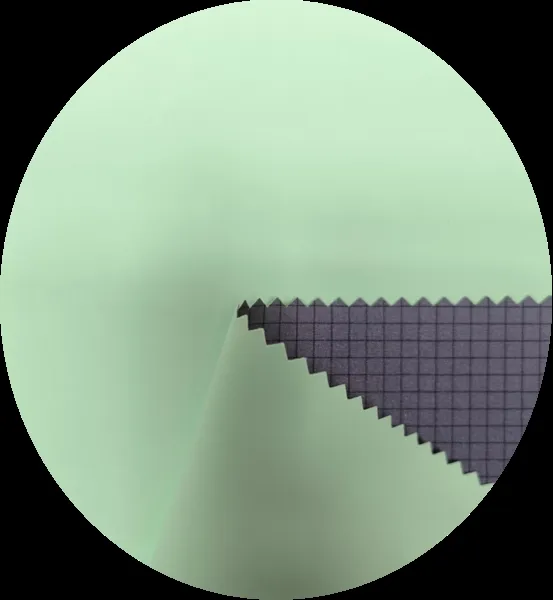

In the worldwide cloth and clothing business, technical materials that combine light strength, soft feel, and many finish choices are very wanted. Among these, Grid Chunya fabric has become a top pick for outer coats, sports clothes, and useful wear.
This paper analyzes what actually is Grid Chunya fabric, its composition, structure, and manufacturing techniques. This paper will also analyze the reasons why it has gained preference among many brands in both fashion and industrial textile markets.
What Is Grid Chunya Fabric?
Chunya is the English name for a base material among polyester woven fabrics whose original Chinese name was Grid Chunya Fabric. Chunya literally meant spring elegant taffeta — a fine, smooth, and lightweight plain weave fabric usually created out of low-elasticity polyester yarns. Grid represented that patterned structure on the surface — a subtle or visible checkered effect formed either by:
- Jacquard weaving (woven-in grid)
- Printed patterning (surface printed grid).
Grid Chunya fabric includes the following:
The weight and sheen of typical Chunya, plus the beauty and structural interest of a plaid or check grid. Jackets, outdoor shells, backpacks, uniforms, and anything else where style needs to meet performance are typical applications.

What Is the Material Composition of Grid Chunya Fabric?
The basic component of Grid Chunya fabric is polyester (PET, Polyethylene Terephthalate). Most commonly used are 75D×75D or 50D×50D low-elastic filament polyester yarns.
-
Typical Composition
- Main Fiber: 100% Polyester
- Yarn Specification: 75D/36F, 50D/72F (low elastic, filament)
- Weave Structure: Plain or Twill
- Finish: Matte / Semi-dull / Bright, PU coated or laminated
-
Optional Additives or Blends
Some advanced variations may include nylon for more abrasion resistance. Spandex for slight stretchiness. Recycled polyester (rPET) for sustainability.
At core, Grid Chunya fabric keeps the synthetic strength while giving a smooth, cloth-like touch feel —something that normal polyester taffeta can’t quite match.
Why Choose Grid Chunya Fabric?
Choosing Grid Chunya fabric is not an aesthetic choice — it is a tactical decision based on what delivers regarding performance, cost-efficiency, and branding value.
-
Balanced Performance
It gives an ideal merging of:
- The lightweight provides comfort
- Strength and tear resistance are moderate
- Color yield and fastness are good
- Print and coating adaptability is excellent
-
Aesthetic Flexibility
The pattern of the grid, being subtle, gives an added look that defines the quality of the fabric. It finds maximum use in outdoor fashion, where plain weaves usually look very flat and basic.
-
Functional Versatility
Grid Chunya may be coated, laminated, or printed on such that it presents any combination of waterproof and windproof or breathable attributes. It does not lose fashionability.
-
Cost-Effective
This material has the same technical function as nylon ripstop or composite shell fabrics but offers a lower material cost. The Grid Chunya is targeting the mass-market sportswear and jackets.

Comparison: Grid Chunya Fabric vs. Regular Plain Polyester Fabric
| Feature | Grid Chunya Fabric | Plain Polyester Taffeta |
| Surface Texture | Subtle or visible grid pattern | Smooth, flat texture |
| Material Composition | 100% low-elastic polyester | 100% polyester |
| Strength & Tear Resistance | Higher (due to grid structure) | Moderate |
| Aesthetic Appeal | Premium, modern | Basic |
| Coating Compatibility | Excellent for PU/PTFE/PA coatings | Standard |
| Common Uses | Jackets, backpacks, outdoor apparel | Linings, umbrellas, flags |
| Price Level | Mid-range | Low-cost |
Verdict: Grid Chunya fabric adds structure, depth, and functional durability to traditional polyester taffeta — ideal for performance-focused apparel manufacturing.
Key Parameters to Consider When Selecting Grid Chunya Fabric
The technical parameters and the application for which it is used define the Grid Chunya fabric.
-
Yarn and Density Specs
- 75D×75D, 50D×50D, 100D×100D
- Weave Density 210T–300T
- Weight Range 65–120gsm
Higher-density fabrics are smoother and stronger when compared with lower-weight fabrics, which breathe better.
-
Grid Pattern Design
The “grid” effect varies essentially by:
- The grid size — from micro-grid (subtle check) to macro-grid (visible pattern)
- By color arrangement — tone-on-tone, two-tone, or multicolor
- By formation method — Jacquard (woven grid) or printed grid.
Woven grids last longer and look better, while printed grids cost less and work well for making just a few at a time.
-
Finishing & Coating
Grid Chunya fabric supports multiple finishes to meet performance requirements:
- Matte (Dull): Soft, elegant finish, popular for casual wear.
- Semi-dull: Moderate sheen, common for outdoor jackets.
- Bright: Glossy finish for vibrant visual effect.
- PU Coating: Adds waterproof and windproof properties.
- PTFE (Teflon) Lamination: Enhances breathability and water vapor transmission.
- PA/AC Coating: Lightweight water-resistant finish.
-
Application-Oriented Selection
Depending on the target use:
- Outdoor jackets: PU or PTFE-coated 75D×75D
- Backpacks: Heavier 100D×100D with PU coating
- Casual wear: Light 50D×50D semi-dull fabric comes with a grid design. For industrial protective wear.

Weaving and Dyeing Processes of Grid Chunya Fabric
-
Weaving
Grid Chunya is ordinarily done by using low-elongation polyester yarns in the plain or twill weave.
The grid structure is formed by either alternating the warp and weft tension, or patterned yarn arrangements.
High-level looms, such as air-jet or water-jet looms, guarantee regular density and exact grid geometry.
-
Pattern Formation
Jacquard Grid:
- One is created at the stage of weaving.
- Much more enduring with a fancy feel to it.
- Used for high-end apparel, most preferred.
Grid, which is printed:
- Printed on plain Chunya base.
- Cheaper when patterns are changing fast.
-
Finishing and Lamination
To enhance performance, Grid Chunya may undergo:
- PU coating: Water resistance & smooth hand feel.
- PTFE membrane lamination: Breathable waterproofing.
- Bonding with mesh or fleece: Added insulation for outerwear.
Functional Performance Indicators of Grid Chunya Fabric
Grid Chunya’s popularity comes from its ability to meet diverse functional standards:
| Performance Metric | Typical Value / Feature | Purpose |
| Water Resistance | ≥ 5000 mmH₂O (PU coated) | Rainproof, outdoor usage |
| Moisture Permeability | ≥ 3000 g/m²/24h (PTFE) | Breathable comfort |
| Anti-static | Conductive fiber blend or finish | Reduces static buildup |
| Wrinkle Resistance | Moderate to good | Maintains shape after wear |
| Colorfastness | 4–5 Grade | Long-lasting color retention |
| Abrasion Resistance | ≥ 20,000 cycles | Suitable for outdoor or industrial wear |
Main Application Fields of Grid Chunya Fabric
Because of its versatility, Grid Chunya finds application in:
- Outdoor and Sportswear: Jackets, windbreakers, vests
- Uniforms: School or industrial uniforms, because it has to be durable
- Bags and Luggage: As a lining or as the outer shell, since it is lightweight but strong
- Fashionwear: In casual jackets, trousers, or parkas, because it gives a textured look
- Functional Garments: PU/PTFE laminated versions for waterproof performance
Key Advantages of Grid Chunya Fabric
- Light in weight yet heavy on strength — polyester makeup with grid reinforcement.
- Good partner for coatings — takes well to waterproof, windproof, and breathable finishes.Have a look, a slight check pattern gives style.
- Simple care — machine wash, fast dry.
- Low cost — brings a technical aspect at an average price point.
- Green choices — recyclable poly or rPET forms.
Buying and Application Guide for Grid Chunya Fabric
When selecting Grid Chunya fabric for product development or retail:
- Specify use—fashion, outdoor, or industrial.
- Choose the right yarn count—75D×75D for lightweight, 100D×100D for heavy-duty.
- Specify what coating is being applied — PU coatings are used for waterproofing treatments, and PTFE membranes offer breathability.
- Request Test Reports — Demand test reports on colorfastness under rubbing and washing, hydrostatic pressure, and tear strength in both directions.
- Compare Finish Options —Compare dull, semi-dull, or bright finishes.
- Ask for Sustainable Versions — Always ask if it comes in a sustainable version like rPET or recycled polyester.
Frequently Asked Questions (FAQ)
Q1: How Do Fabric Brands Position Grid Chunya?
Leading manufacturers market Grid Chunya as a “functional polyester shell fabric” — suitable for mid-range outdoor jackets, casual sportswear, and corporate uniforms.
It’s often showcased alongside ripstop and Taslon fabrics in product catalogs.
Q2: What Trends Are Apparel Buyers Looking For?
Fashion and functional textile buyers focus on:
Matte and textured surfaces (less glossy)
Lightweight waterproof coatings
Eco-friendly coatings (non-PFC PU or TPU)
Soft-hand, noise-free laminates for better wear comfort.
These align with sustainable and minimalist design trends in global outdoor apparel.
Q3: What Should Be Checked During Fabric Quality Inspection?
Uniform grid pattern (no distortion)
Stable coating adhesion
No color migration during wet rubbing test
Low shrinkage rate (<2%)
High tear and tensile strength
Testing according to GB/T 4744, ISO 811, or AATCC standards ensures reliability.
Q4: What Do Apparel Brands Require Most From Grid Chunya Suppliers?
Key requirements include:
Stable bulk color reproducibility
Waterproof coating durability (≥5000mm)
Soft touch without plastic feeling
Compliance with OEKO-TEX® or REACH standards
Brands also value customizable grid patterns and sustainable production certifications from mills such as mosaicsmarble.com and other technical textile manufacturers.
Conclusion
What then is the material of Grid Chunya fabric? It is a polyester-based woven fabric with a grid-pattern structure, presenting a surface that refinement may touch while describing its functional adaptability.
Lightweight strength joined by visual appeal and coating compatibility puts it high up in the run for jackets, uniforms, outdoor wear, and fashion-forward casual apparel.
With the evolution of textile technology,͏ Grid Chunya fabric stays one of the main options for designers and manufacturers who want to achieve technical quality at a budget rate with output having a premium look — it delivers form AND function.