Overslaan naar inhoud


Introductie
When developing an activewear line—or simply testing gear through intense training—the real question is always the same: will the fabric actually hold up in use?
Activewear is constantly exposed to stretching, friction, compression, and frequent washing. Over time, many materials begin to lose shape, pill on the surface, or look worn out much earlier than expected.
This is where nylon jacquard fabric often comes into consideration. It stands out for its textured appearance, but the more important question is performance: can it withstand real training conditions while maintaining structure and durability? In this article, we’ll look at how nylon jacquard fabric performs in real applications and how it compares with other common activewear materials.
Wait—What Exactly Is Nylon Jacquard Fabric?
Before we talk durability, let’s get clear on what we’re actually dealing with.
Jacquard isn’t a fiber. It’s a weaving technique. Unlike printed patterns that sit on top of the fabric, jacquard weaves patterns into the fabric structure itself. Think of it like knitting a logo directly into a sweater versus screen-printing it on. The design becomes part of the textile, not an afterthought.
When you combine that with nylon jacquard fabric, you get something special: the strength and lightweight properties of nylon, plus intricate, permanent patterns that won’t peel, crack, or fade over time.
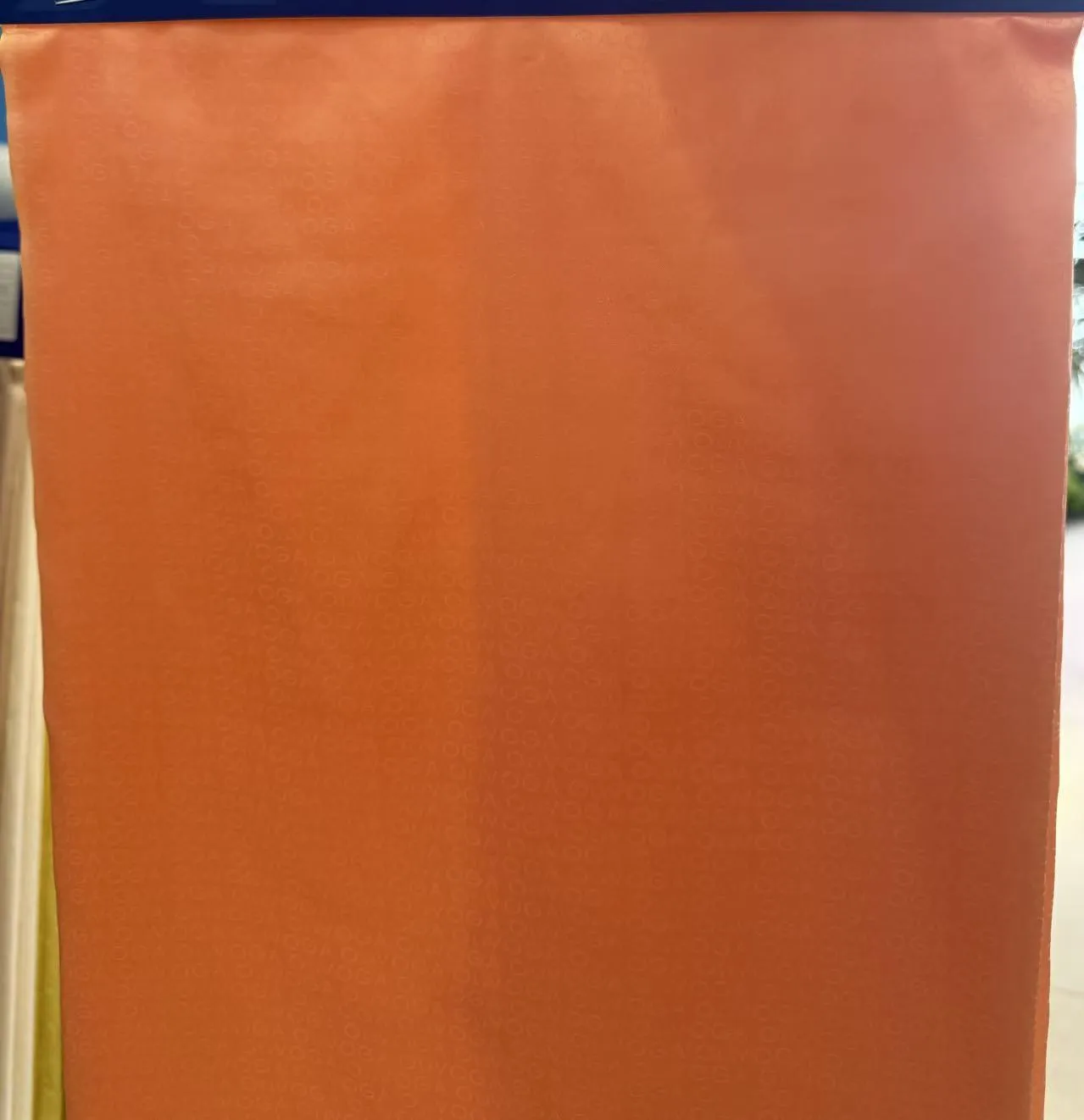
The 40D Nylon Letter Jacquard from Xiangpeng, for example, uses ultra-fine 40D nylon as its base. At just 64g/m², it’s incredibly lightweight. But don’t let that number fool you—this fabric retains the high-strength characteristics that nylon is famous for.
Here’s the key distinction: nylon jacquard fabric isn’t one single thing. It comes in different weights, fiber blends, and constructions. Some are knit, some are woven. Some include spandex for stretch; others are 100% nylon. The durability question depends heavily on which version you’re talking about.

How Durable Is Nylon Jacquard Fabric Really? Let’s Look at the Numbers
Here’s the honest breakdown. I’ve pulled together data from multiple sources to give you a clear picture of how nylon jacquard fabric performs across the key durability metrics that matter for activewear.
| Durability Metric | Nylon Jacquard Performance | What It Means for Activewear |
|---|---|---|
| Schuurweerstand | Excellent—nylon fibers resist pilling and surface wear | Survives friction from movement, gym equipment, and daily wear |
| Tear/Tensile Strength | High nylon has superior tensile strength vs. polyester | Resists ripping during high-motion activities |
| Shape Retention | Excellent—bounces back after stretching | No saggy knees or baggy elbows |
| Kleurechtheid | Very good—patterns are woven in, not printed | No fading after repeated washes |
| Pilling Resistance | High—jacquard structure minimizes surface friction | Stays looking new longer |
| Duurzaamheid wassen | Withstands 100+ washes (ISO 6330 tested) | Long-term performance, not just first-wear |
Let me unpack what these numbers actually mean for you.
Slijtvastheid is probably the most important durability factor for activewear. Think about it: your leggings rub against each other during a run. Your sports bra rubs against your skin and your outer layers. Nylon fibers give nylon jacquard fabric good abrasion resistance and long-lasting performance. It resists pilling, retains color well, and maintains its shape after repeated wear and washing.
Treksterkte is another big one. Nylon fibers have a higher tensile strength than polyester—meaning they can be stretched further before breaking. This is crucial for activewear that needs to move with you, not against you.
Shape retention matters because nobody wants leggings that bag out at the knees. Nylon-spandex blends are known for their ability to stretch and then “bounce back,” holding form without sagging. The spandex content ensures excellent stretch and snap-back, so the fabric does not easily become baggy or misshapen over time.
And here’s something that surprised me: some nylon jacquard fabric constructions can withstand over 100 washes without losing their integrity. That’s serious longevity for a performance fabric.
But How Does Nylon Jacquard Compare to Other Activewear Fabrics?
Let’s be real. You’re probably comparing nylon jacquard fabric against other options. So here’s a direct comparison.
| Fabric Type | Schuurweerstand | Stretch Recovery | Ademend vermogen | Durability Over Time |
|---|---|---|---|---|
| Nylon Jacquard | Uitstekend | Excellent (with spandex) | Good to Excellent | Zeer hoog |
| Plain Nylon-Spandex | Goed | Uitstekend | Goed | Hoog |
| Polyester-Spandex | Goed | Goed | Goed | Hoog |
| Katoen | Slecht | Slecht | Uitstekend | Laag |
| Polyester | Goed | Matig | Matig | Matig |
Here’s the thing about polyester: it’s known for being highly durable and resistant to wear and tear. But nylon offers superior abrasion resistance and a softer hand-feel. For activewear that’s going to rub against skin and equipment, that softness plus durability is a winning combination.
Polyester tends to have a firmer feel, providing more structure. Nylon jacquard fabric feels softer, with a slightly silky touch that gives it a more high-end appearance.
For high-intensity activities like strength training or HIIT, a blend of nylon and polyester with spandex is often recommended—nylon resists friction, and the blend offers better support. For yoga, a nylon blend with 15-20% spandex provides the high stretch needed for poses.
Nylon jacquard fabric fits neatly into both categories. With the right fiber blend, it delivers the softness and stretch of nylon plus the structural durability that activewear demands.
The Breathability Factor: Can Nylon Jacquard Fabric Breathe?
Durability doesn’t mean much if the fabric can’t stay comfortable during intense movement. That’s where breathability becomes just as important as strength.
One interesting characteristic of nylon jacquard fabric is that its woven structure can naturally improve airflow. Technical textile sources note that jacquard patterns may create micro-ventilation channels, improving airflow by around 30% compared with tightly constructed plain knits. This effect is not from the fiber itself, but from the structural openness created during weaving.
The 40D Nylon Letter Jacquard is designed with this balance in mind. It is described as ultra-lightweight and breathable, offering a soft hand-feel and low fabric weight that supports extended wear without excessive heat buildup.
In terms of fiber behavior, nylon provides moderate moisture management, while spandex contributes stretch but limited moisture control on its own. This is why most nylon jacquard fabric constructions are blended systems—typically nylon with spandex, and in some cases polyester—to balance elasticity, comfort, and drying performance.
Some nylon jacquard fabric variants also include functional finishing treatments, such as hydrophilic or quick-dry coatings. Certain lightweight constructions can dry in under 20 minutes, making them suitable for high-sweat training environments where recovery time matters.
Breathability performance ultimately depends on fabric weight and structure:
- Lightweight versions (e.g. 40D / ~64g/m²): better airflow and cooling comfort
- Medium to heavy jacquards (170–180g/m²): higher structure and compression, but reduced heat dissipation
- Weave density: looser jacquard patterns generally improve ventilation
What About Real Workouts? Where Does Nylon Jacquard Fabric Actually Shine?
Performance data is useful, but the application is what really defines value.
In real production use, nylon jacquard fabric is commonly selected for categories where branding, comfort, and durability need to work together:
- High-end activewear – premium leggings, sports bras, training tops
- Lichtgewicht outdooruitrusting – running jackets, base layers, travel wear
- Branded identity apparel – garments where logos or lettering are integrated into the fabric structure itself
The 40D Nylon Letter Jacquard, for example, is positioned for high-end activewear and lightweight functional apparel. Its jacquard construction allows patterns or lettering to be woven directly into the fabric, creating a more durable alternative to printed designs that may fade or crack over time.
Beyond sportswear, nylon jacquard fabric is also used in:
- Athleisure collections where comfort and appearance must align
- Shapewear and lingerie require softness with structural recovery
- Base layers where close-to-skin comfort and flexibility are essential
In these applications, the advantage is not just visual design, but the combination of structure, elasticity, and long-term wear stability.
Can Nylon Jacquard Fabric Handle Finishing Treatments?
Here’s something a lot of people overlook. A fabric’s durability isn’t just about the base material—it’s also about what you can do to it.
Nylon jacquard fabric serves as an “ideal base for various finishing treatments”. That means you can add:
-
Waterproof/water-repellent finishes – Keep wearers dry in changing conditions
-
Antimicrobial/odor-control treatments – Meets hygiene needs for activewear
-
UV-bescherming – Shields against outdoor sunlight
This versatility is a big deal for activewear. A single nylon jacquard fabric can be customized for running (moisture-wicking), outdoor training (UV protection), or gym use (antimicrobial). And because the jacquard pattern is structural, these finishes don’t compromise the visual integrity of the fabric.
Some nylon jacquard fabric products also come with OEKO-TEX® certification, ensuring they’re safe for skin contact. That’s increasingly important for activewear that’s worn directly against the skin for hours at a time.
Common Misconceptions About Nylon Jacquard Fabric Durability
Let me clear up a few things I hear constantly about nylon jacquard fabric.
Myth 1: “Jacquard is just decorative—it doesn’t add durability.”
Wrong. Because jacquard patterns are woven directly into the fabric structure rather than printed on top, they actually reinforce the textile. The patterns aren’t going to crack or peel because they’re not a separate layer. This construction overcomes the limitations of traditional printing—avoiding cracking and degradation.
Myth 2: “Nylon isn’t as durable as polyester for activewear.”
This one’s partially true but misleading. Polyester is highly durable and colorfast. But nylon offers superior abrasion resistance and a softer hand-feel. For activewear that needs to move with the body and feel comfortable against the skin, nylon is often the better choice. The key is understanding the trade-offs.
Myth 3: “All nylon jacquard fabric is the same.”
Absolutely not. The 40D version at 64g/m² is ultra-light and breathable. Other nylon jacquard fabric variants weigh 170-180g/m² and offer more compression and structure. Some include spandex for stretch; others are 100% nylon. The durability and performance vary significantly based on the specific construction.
Myth 4: “Jacquard fabric is delicate because it looks fancy.”
This is the opposite of the truth. The jacquard weave actually makes the fabric more structurally stable. One manufacturer specifically notes that nylon jacquard fabric is “tough, abrasion-resistant, and tear-resistant, making it perfect for products that see frequent use”.
How to Choose the Right Nylon Jacquard Fabric for Your Activewear
If you’re sold on nylon jacquard fabric but aren’t sure which version to pick, here’s a simple guide.
For high-intensity training (HIIT, CrossFit):
Look for a blend with nylon + polyester + spandex. The nylon resists friction from equipment and floor work, while the blend offers better support. A heavier weight (170-180g/m²) provides more structure and compression.
For yoga, Pilates, and low-impact activities:
A nylon-spandex blend with 15-20% spandex gives you the stretch and flexibility you need. The 40D version at 64g/m² is perfect here—ultra-light and breathable with excellent freedom of movement.
For outdoor running and training:
Look for nylon jacquard fabric with UV protection and moisture-wicking finishes. The jacquard weave’s breathability (up to 30% more airflow) is a major advantage for cardio workouts.
For swimwear:
Choose a nylon jacquard fabric with spandex for stretch and recovery. Nylon’s shape retention holds up well in pool environments.
For branded premium activewear:
The 40D Nylon Letter Jacquard is specifically designed for brand integration—weaving logos and patterns directly into the fabric. This creates product exclusivity and premium appeal that printed fabrics can’t match.
Real Talk: The Trade-Offs You Need to Know
While nylon jacquard fabric performs well in many activewear applications, it is not a one-size-fits-all solution. Like most performance textiles, its suitability depends on how and where it is used.
Cost consideration.
Jacquard weaving requires more complex machinery and controlled production compared to plain knitting or standard weaving. As a result, fabrics like the 40D Nylon Letter Jacquard are typically positioned in the premium segment. For projects where cost efficiency is the primary focus, simpler nylon-spandex constructions may be more suitable.
UV and long-term exposure.
Although nylon offers strong mechanical performance, it can be more sensitive to prolonged UV exposure compared to polyester. In outdoor applications with strong sunlight, color fading may occur over time unless UV-resistant finishes are applied.
Thermal sensitivity.
Nylon-based nylon jacquard fabric can be affected by high temperatures, which may lead to slight yellowing or surface changes under improper care. Controlled washing and low-temperature drying are generally recommended to maintain fabric appearance and performance.
Construction differences.
Not all nylon jacquard fabric is designed for activewear. Some versions are made from 100% nylon with limited stretch. For performance apparel, blends with approximately 15–20% spandex are more common to ensure elasticity, recovery, and comfort during movement.
Conclusie
In most activewear applications, nylon jacquard fabric offers strong durability. It combines nylon’s inherent strength with jacquard structural stability, providing good resistance to abrasion, pilling, and deformation after repeated washing. Woven patterns also help maintain long-term appearance.
The 40D Nylon Letter Jacquard (64g/m²) is a typical example—lightweight yet durable, suitable for high-end activewear and lightweight outdoor apparel where both performance and visual design matter.
However, application still matters. High UV exposure or budget-sensitive projects may require alternative constructions or additional finishing.
For premium activewear and branded textiles, nylon jacquard fabric remains a balanced choice in terms of durability, structure, and design flexibility.