Skip to content


Introduction: Defining the Term and Its Relevance
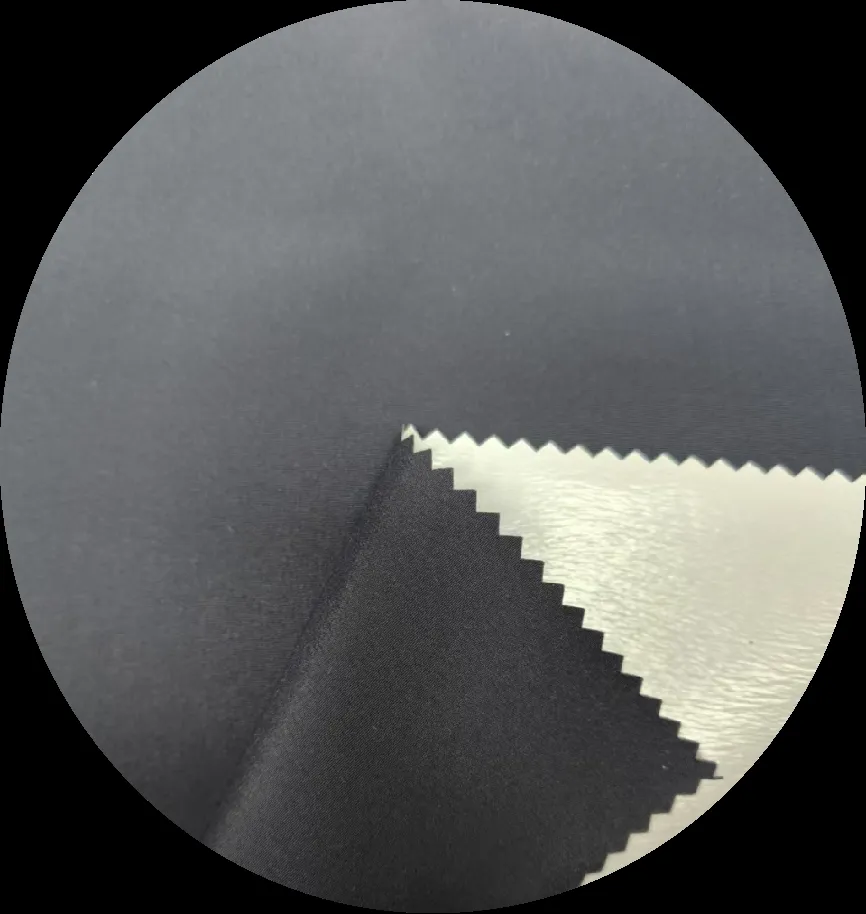
“Semi-dull high-elastic polyester fabric” is a term used to describe fabric that is both woven and knitted from polyester fibers that have been processed to combine the properties of:
a dull finish that is similar to semi-brilliance, the yarns’ luster has been reduced in comparison to the bright polyester, resulting in a soft sheen or modest gloss, not glossy nor matte.
With a high stretchiness or elasticity, achieved through the selection of yarns (e.g., textured polyester fibers, drawn textured fibers, or elastomer-based fibers), this results in fabric that has good stretch, recovery, comfort, and durability.
This fabric type is significant in the apparel industry, the home textile industry, and functional clothing. They provide a balanced appearance ( neither too bright nor too dull), with the practical benefits of polyester (strength, durability, easy care).
Today, the supply of textiles is typically via electronic means, especially for apparel that requires a specific fit, drape, or elasticity (e.g., activewear, pants, knitted tops, stretchy shirts, home textiles), or semi-soft fabric with high elasticity.
In this article, we discuss:
- What the term “semi-dull” means in the polyester fabric/ yarn context – the technical basis, how it is achieved;
- what the definition of high elasticity is, and how it is implemented in polyester fabric;
- production process: type of yarn, fabric composition, and final treatment;
- properties and performance (mechanical, aesthetic, comfort);
- typical uses;
- benefits and drawbacks compared with bright polyester, full-dull polyester, or natural fibers؛
- selection and evaluation criteria;
- industry developments and the future direction.
This comprehensive article helps textile engineers, fabric specialists, and consumers understand the benefits of the product, the technical feasibility of the product, and the limitations of the product.
Understanding “Semi-dull” — What It Means, Why It’s Used
-
The definition of Semi-dull Polyester Yarn
In the production of polyester filament, the term “semi-dull” is used to describe yarns that have a lower luster than bright polyester. The chemical or physical modification of the yarn during or after production is responsible for this.
While bright polyester fibers offer high reflectivity and a glossy surface (commonly utilized when sheen is desired), semisweet fibers produce a less perceptible gloss, which results in a more subdued, softer appearance. According to a textile industry explanation, polyester fabric is made by altering the fibers to have a “lessening glistening” effect.
Other than that, semi-brilliant can be compared to other polyester varieties:
Bright (or bright/ optic bright): maximum radiance, high reflection.
Semi-dull: average luster — sheen and not glossy.
Full-dull (or dull / matte): minimal radiance, more matte appearance.
-
Why Semi-dull?
The use of medium-dull fabric and yarn has multiple benefits:
Balanced Aesthetic: The fabric’s semi-brilliant appearance is more refined and versatile than the overly shiny bright polyester; it is also appropriate for apparel that requires a bit of luster (e.g., pants, suits, casual wear, home textiles, curtains). The moderate lighting can increase the perceived quality while not appearing overly artificial. Industry sources indicate that medium-dull fibers are commonly employed in the apparel and domestic textiles industry because of their proportional balance.
Increased Dyeing / Printing Efficiency: Semi-bright / dull surfaces have a tendency to accept dyes, pigments, and treatments more uniformly than bright surfaces, which have a tendency to reflect more light and may highlight surface irregularities. Textile-sourcing manuals indicate that medium or full-dull fibers have a good capacity to absorb dyes and maintain their color.
Less apparent and more “fabric-like” feel: Compared to glossy polyester (shiny), semisweet has a more textile-like, subdued appearance that is closer to the natural fabric cotton in terms of visual presentation. This can be appropriate for apparel that is mid-range to high-end, where the artificial sheen is not desired.
As a result, semi-soft polyester fibers fill a design space: combining the longevity and ease of care of polyester with a more visually pleasing, more versatile aesthetic.

What Gives “High Elasticity” — How Polyester Fabrics Acquire Stretch
“Semi-dull high-elastic polyester fabric” possesses its elasticity in part through the luster treatment, but primarily through the type of fabric and its construction/end. Key mechanisms include:
-
The utilization of Textured Polyester Yarn (DTY / POY)
One primary method of altering the stretchiness of polyester fabric is to utilize textured polyester fibers, for example, draw-textured fibers (DTY) derived from partially-oriented fibers (POY). Semi-dull DTY — textured fabric derived from Semi-dull POY — enhances the stretch, softness, and drape of fabric.
Textured fibers produce crimps, loops, or other irregularities along the length of the fiber, which add to the elasticity, bulk, and a more natural feel. When combined into fabric, these fibers allow the fabric to stretch, regrow, and maintain its shape—essential for fabric that requires flexibility, comfort, or a specific fit (e.g., pants, sportswear, stretchy garments). Some semifluffy DTY fibers are explicitly advertised as having a “good tensile strength and good retraction force.”
-
Combined/Composite Yarns or Elastomer-enhanced Yarns
In some instances, “elastic” polyester fabric may include a mixture, for example, polyester + elastane/Spandex, or cationic fabric that is semi-soft and has enhanced elastic recovery. Some manufacturers describe “semi-soft polyester combined fabric” as having a “good suppleness, high elasticity, and fluffiness.”
Blending or co-spinning with elastomeric fibers increases the fabric’s stretch and recovery, enabling the creation of garments that fit the body and have a recovery after stretch. These garments resist sagging and are deformation-resistant.
-
Fabric construction and completion
Even with textured or blended fibers, the fabric’s construction (weaving or knitting pattern, density, weave type) and final processes ( Heat setting, mechanical finishing, dyeing, mechanical stretch finishing) have an effect on the fabric’s elasticity, hand feel, drape, and performance. For instance, a fabric made from textured yarn that is semi-soft will have a greater stretch and a more comfortable feel than a fabric that is tightly woven and made from the same material.
As a result, “elasticity” is said to be high if the aforementioned components are all of the same type, fabricated from the same material, and finished in the same manner. Not all components have to be elastic, however.
Production Process Overview: From Raw Materials to Final Fabric
To produce semi-dull high-elastic polyester fabric, textile manufacturers typically follow a multi-stage process:
| Stage | Purpose / Role |
| Polymer & Melt Spinning | Polyester components (e.g., PTA + MEG) are combined, melted, and extruded into fibers. To produce a semi-intense, alteration (chemical or physical) is employed during the spinning process or immediately following the extrusion process to disrupt the smoothness of the filament and reduce shin |
| Drawing / Orientation | Filaments are strained (stretched) to orient the molecular chains. This improves the strength, consistency, and stability of the fabric, creating a partially-oriented fabric (POY) or a fully-drawn fabric (FDY). Then, Semi-dull POY can be employed as the base material for creating textured fabric. |
| Texturizing / Twisting (for stretch yarns) | POY is fed into machines that texturize (e.g., false-twist, air-jet) to produce textured yarn (DTY) that has crimps, which produce flexibility, bulk, and softness. Semi-dull DTY has a reduced sheen while increasing compliance. |
| Blending / Composite Spinning (optional) | If greater stretch or recovery is desired, polyester can be mixed with elastomeric fibers or other materials to create composite yarns that have increased stretch and a regrow. Some combinations of yarn that are advertised as having improved softness and stretchiness are considered to be semi-dull. |
| Weaving or Knitting Fabric | Depending on the intended use of the fabric, the yarns are used to weave or knit the fabric. Knitted structures typically maximize stretch and comfort, while woven structures can provide solid, structured fabrics with a moderate degree of elasticity ( contingent on the type of yarns or blend). |
| Finishing / Heat-setting / Dyeing / Processing | Ultimate steps (heating, coloring, mechanical processing) that set the dimensions of the fabric, maintain its elasticity, increase the hand feel, and prepare for additional manufacturing of garments. Also, semi-soft yarns facilitate effective coloration and consistent color. |
Through these stages, manufacturers balance optical properties (semi-dull appearance), mechanical properties (elasticity, strength), and fabric performance (comfort, durability, dyeability).
Properties & Performance of Semi-dull High-elastic Polyester Fabric
The fabric’s resulting middle-toned, high-elasticity polyester fabric possesses properties that are derived from polyester’s base plus extra properties derived from the selection of yarns and the engineering of the fabric. Significant attributes include:
-
Mechanical Strength & Durability
High tenacity: Polyester fiber is inherently powerful — as reported by suppliers, the strength of the fiber is increased significantly compared to natural fibers, for example, “it’s nearly 1 times stronger than cotton and 3 times stronger than wool.”
Abrasion resistance and wear resistance: Among synthetic fibers, polyester has a high ranking in both of these properties (along with nylon), which makes these fibers ideal for fabricated clothing that experiences friction or heavy usage.
Stable dimensions and low shrinking rate: Semi-soft polyester fabric generally has a low shrinking rate after washing and a good retention of shape due to the fabric’s thermoplastic stability and the properties of textured/blended yarns.
-
Elasticity, Recoveries, and Comfort
Because of textured or elastomer-based fabric:
The fabric’s stretchiness and recovery capabilities offer comfort, fit, and freedom of movement—all of which are vital to garments like pants, knits, athletic wear, and casual wear.
Elastic recovery is beneficial because it allows the garment to maintain its shape and resist distortion or sagging over time.
For fabricated knits, the “hand feel” is enhanced, the fabric is more comfortable to wear, and the drape is improved compared to polyester, which is rigid.
-
Aesthetic and Visual Characters
Because of the middle-aged man:
Moderate radiance — neither overly shiny nor dull — that promotes a balanced, textile-like appearance that is effective in casual, formal, domestic, and accessories.
Color and dye performance: Semi-bright yarns and their resulting fabric typically have a uniform tendency to take dyes, which is beneficial for the fashion industry, interior design, curtains, and decorative textiles.
Surface pattern: Textured fibers may contribute to a slight lack of uniformity or softness on the surface, which enhances the fabric’s feel rather than its sheen.
-
Functional Performance
The properties of polyester are inherently beneficial:
Heat and thermal stability: Polyester fibers have a wide range of temperature tolerance and maintain their strength and consistency over a broad range of temperatures. Semi-dull polyester is commonplace.
Low water content and quick drying: The hydrophobic nature of polyester causes it to have a low water content and to dry quickly compared to natural fibers. This is beneficial for use in activewear, outdoor gear, and domestic textiles.
Easy to care for, resistant to wrinkling, and maintained by the fabric: the fabric retains its shape, it is easy to wash and dry, and it doesn’t shrink much, which makes it appropriate for everyday garments and textiles that require durability and low maintenance.
Cost-effectiveness: Compared to natural fibers or complex combinations, semi-soft polyester fabric with high elasticity tends to have a favorable cost-performance ratio, particularly for mid-range markets.
Typical Applications and Use Cases
Because of its property profile, the fabric is well-suited for a variety of purposes in clothing, home textiles, and functional textiles. Common scenarios that are typically used are:
Casual clothing and everyday outfits: pants, skirts, shirts, blouses – these garments are important because they help to maintain comfort, drape, and shape, and they are not too sheeny.
Stretch and contoured apparel: knitted tops, leggings, activewear, athleisure clothing – all of these garments utilize the stretch and recovery properties.
Home textiles and décoration: curtains, upholstery, cushion covers, drapes – where the benefits of moderate lighting, durability, and ease of care are present, and the appearance is semi-formal, in line with interior design. Semi-dull fibers are commonly employed in the home textile industry.
Industrial and technical textiles: purposes for which high strength, abrasion resistance, dimensional stability, and sheen are desired — for example, seat covers, workwear, bags, webbing, and technical garments. Some medium-dull polyester fibers that are dyed with food coloring are used in high-density applications like sewing, webbing, special fibers, and technical fabric.
Blended cloths: when polyester is combined with other fibers (e.g., cotton, rayon), a semi-intense polyester can have a balanced composition: the fiber’s durability and shape are both maintained, as is the polyester’s softness or breathability.
Fast fashion and mass-market clothing: Because of its effectiveness as a cost-saving and versatile fabric, semi-formal polyester fabric is popular for apparel, uniforms, and other items where the cost, performance, and appearance are important.
Advantages vs Limitations: Why Choose — or Not — Semi-dull High-elastic Polyester Fabric
-
Key Advantages
Aesthetic balance: Provides a middle ground between glossy computer-generated and naturalistic fabric. Extent of the market that is appealing.
Mechanical capabilities: High tensile strength, resistance to abrasion, consistency of dimensions, and shape.
Comfort and functionality: With textured or mixed yarns, fabric has a stretch, drape, and comfort, all of which are appropriate for active or formal wear.
Easy care and long durability: Polyester’s resistance to shrinkage, wrinkling, and wear, combined with elasticity, results in garments that are long-lasting with minimal maintenance.
Cost-efficacy: Lower costs per unit of production, while still providing a high-end quality or fashionable blend.
Versatility: It’s appropriate for a variety of endeavors: apparel, home textiles, and technical textiles.
-
Disparities and substitutes
Breathability and moisture management: The low moisture content and hydrophobic nature of polyester may lead to a lower degree of breathability compared to natural fibers, which may lead to issues with comfort in humid conditions.
Perceived quality and natural fiber: Some consumers may still favor natural fibers (cotton, wool, linen) over synthetic polyester because of their feel, breathability, and naturalness.
Environmental concerns: Polyester is a synthetic polymer that is derived from petroleum; concerns regarding the sourcing of resources (petrochemical) and the microfiber that is shed by the animals, as well as the recycling and environmental impact, are pertinent. For environmentally conscious brands/markets, this can be a negative aspect unless environmentally friendly practices or recycling are employed.
Limitations on elasticity associated with textured polyester fibers include: While textured polyester fibers provide elasticity, their stretch and recovery are often not the same as proper elastane/spandex blends, resulting in high-stretch or compressive garments that still require elastomeric fibers.
Handling differences: Although textured fibers enhance softness and drape, polyester is typically not the same as natural fibers that are considered premium; these fibers are typically perceived as having a less luxurious feel.
thermal comfort: Polyester typically retains heat and feels warmer than cotton or linen in climates that are hot.
As a result, the process of selecting a semi-soft fabric with high elasticity involves compromises; the decision is based on the application, target audience, performance specifications, cost constraints, and sustainability strategy.
Industry Trends & 2025 Outlook
As the textile industry develops, several trends influence the demand, development, and innovation in semi-soft polyester fabrics:
-
Increase in Blended and Functional Polyester textiles
Manufacturers are increasingly producing composite fabric: semi-soft polyester fibers mixed with elastane/spandex, recycled polyester, or other fibers (natural or synthetic) to combine benefits – stretch, durability, aesthetic diversity, and lower environmental impact. This hybrid approach has the potential to expand the range of uses in athleisure, stretch clothing, sustainable fashion, and technical gear.
-
Concern with the Sustainable and Reused Polyester
As global pressure on sustainability increases, many suppliers have switched to recycled polyester fiber (rPET) while still maintaining the performance of their yarn. A semi-brilliant, high-powered polyester fabricated from recycled fibers that satisfies cost, performance, and environmental requirements is popular among brands that are environmentally conscious and want to appease consumers.
-
Advances in the Yarn Engineering and Texturing field.
Enhanced texturing methods, finer denier fibers, more control over the way they are crimped, the recovery of wasted material, and the uniformity of the fibers enable the production of semi-soft, stretchy, and pleasant polyester fabric with a better hand feel, drape, and stretch. This closes the gap with natural fabric.
-
Increased demand for versatile, simple-care fabrics.
As the lifestyles of people shift towards casual, athletic, and work-from-home attire, demand for fabrics that combine comfort, elasticity, easy care, durability, and aesthetically pleasing properties becomes greater. These are precisely the properties that a typical medium-dull polyester fabric possesses.
-
The demand for quality and cost-efficient textiles in the middle range.
Not all markets are associated with natural fibers in a luxurious manner; many segments of apparel, workwear, uniforms, and home textiles value the cost, durability, and functionality of natural fibers. High-elasticity, semi-brilliant polyester fabric’s volume increased here and will likely maintain its share.
Conclusion
“Semi-dull high-elastic polyester fabric” is a mature, technically balanced solution to the modern textile problem of optical uniformity and cost efficiency. For textile scientists, developers, and professionals who source fabric, understanding the fabric’s composition, processing route, performance, and trade-offs is crucial to making accurate decisions.
In a market that is increasingly concerned with versatility, comfort, durability, and environmental awareness, without compromising value, the semi-dull high elastic polyester fabric is particularly notable as a practical, high-value, versatile option. When implemented correctly, it grants power to garments and textile products to fulfill the various demands of consumers: from everyday use to functional apparel, from home textiles to technical fabrics.