Skip to content

Abstract
For apparel and textile buyers, shape retention under repeated stress is a critical performance requirement. This article examines how high elastic polyester fabric delivers consistent stretch recovery, dimensional stability, and a refined semi dull finish, making it suitable for performance wear, workwear, and fashion applications. It also explores the fiber engineering behind elastic recovery and the commercial scenarios where this material outperforms standard polyester fabrics.
1. The Engineering Behind Elastic Recovery
1.1 Fiber Structure and Stretch Mechanism
The elastic performance of this fabric comes from its dual-component construction and advanced texturizing process. Unlike standard polyester filaments, high elastic variants use false twist texturizing to introduce permanent crimp into the fiber structure. This creates a spring-like molecular configuration that enables reversible elongation without damaging the polymer chain.
In commercial production, High Elastic Polyester Fabric is often blended with a small proportion of spandex to achieve an optimal balance between stretch and recovery. The spandex provides immediate rebound force, while the textured polyester stabilizes the structure during repeated deformation cycles.
The 100D specification defines a balanced yarn density that supports both durability and flexibility. This makes the fabric suitable for garments that require shape retention under frequent movement, such as trousers, jackets, and activewear.
Recovery performance is a key quality indicator. Well-engineered elastic polyester fabrics can achieve up to 95 to 98 percent recovery after elongation, helping garments maintain their original shape after repeated wear.
1.2 Semi Dull Finish: Optical and Functional Role
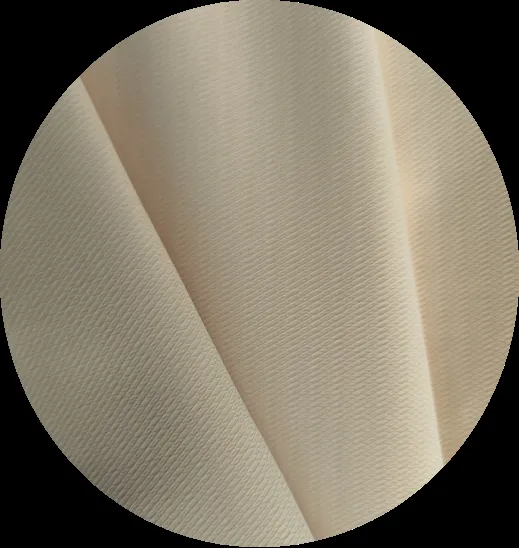
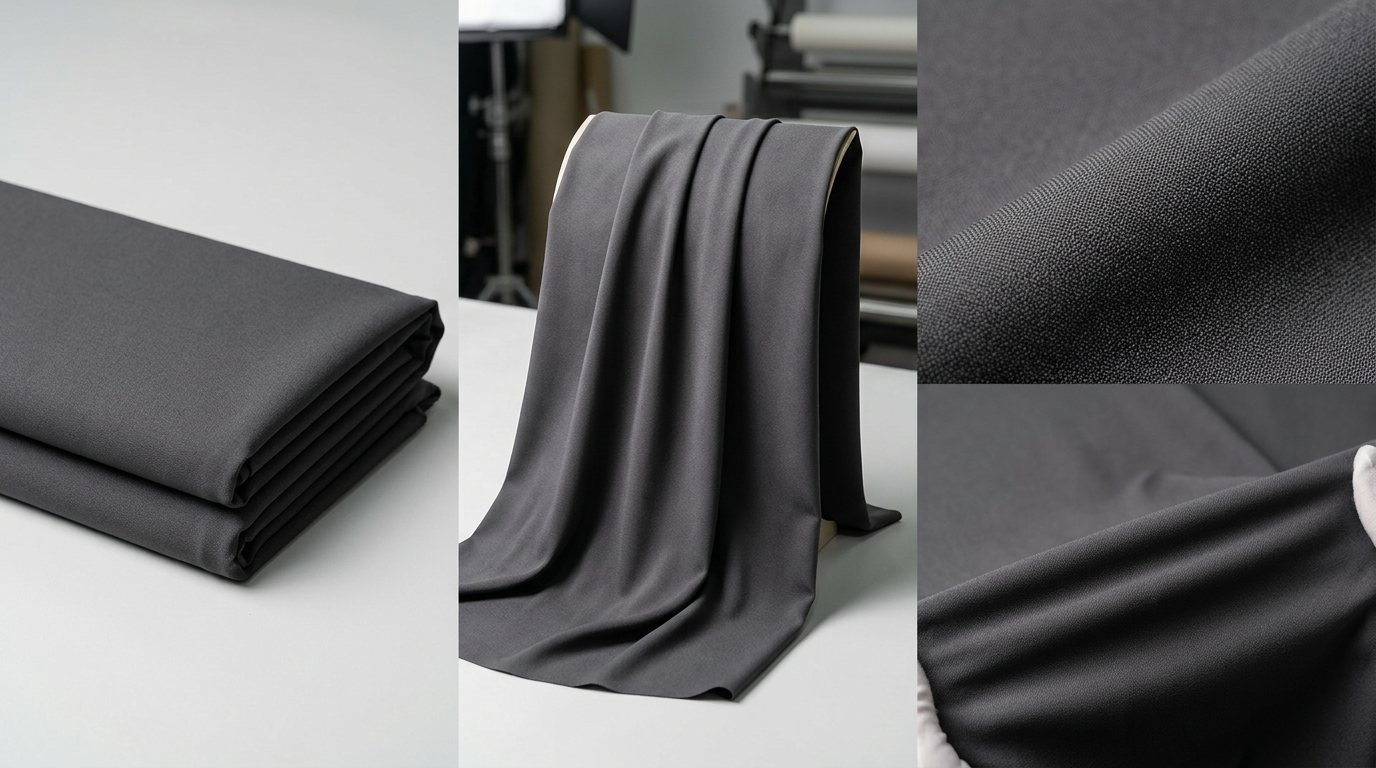
The semi dull finish is achieved through controlled titanium dioxide incorporation during fiber production. This reduces surface reflection and produces a soft matte appearance that is widely preferred in modern apparel design.
In practical applications, this finish improves dye uniformity by minimizing the visibility of yarn irregularities. This is particularly important in dark colored fabrics, where consistency directly affects perceived quality.
It also enhances UV resistance, helping reduce color fading during prolonged exposure to light. This makes semi dull polyester fabrics suitable for both indoor and outdoor garment applications.
Compared with bright polyester, semi dull variants may show slightly higher stiffness, which should be considered when designing lightweight or highly draped garments.
2. Technical Specifications and Performance Benchmarks
2.1 Core Parameters of 100D High-elastic Polyester
Procurement decisions should be grounded in six measurable parameters that directly correlate with end-use performance:
| Parameter | 100D Semi-dull High-elastic | 75D Standard Polyester | 150D Full-dull High-elastic | Test Method |
|---|---|---|---|---|
| Denier (D) | 100 ± 3 | 75 ± 2 | 150 ± 5 | ASTM D1577 |
| Elongation at Break (%) | 25-35 | 15-20 | 20-30 | ISO 2062 |
| Elastic Recovery (%) | 95-98 | 75-80 | 96-99 | ASTM D2594 |
| Tensile Strength (cN/tex) | 38-42 | 40-45 | 35-40 | ISO 2062 |
| Fabric Weight (gsm) | 180-220 | 120-150 | 260-300 | ASTM D3776 |
| Finish Type | Semi-dull (0.3-0.5% TiO₂) | Bright | Full-dull (0.8-1.2% TiO₂) | Visual/Spectroscopy |
Elongation at break measures the maximum stretch before fiber rupture. The 25-35% range for 100D high-elastic fabrics accommodates dynamic movement without approaching failure thresholds. This is critical for stress points like garment seams, where localized tension can exceed 15-20% during normal wear.
Tensile strength (38-42 cN/tex) ensures the fabric withstands industrial laundering, repeated abrasion, and seam slippage forces. Commercial laundries subject workwear to 80-100°C wash cycles and 150-200 rpm extraction speeds — conditions that degrade inferior fabrics within 20-30 cycles. High-quality 100D elastic polyester maintains structural integrity beyond 100 industrial wash cycles.
Fabric weight (180-220 gsm) positions this material in the medium-weight category, suitable for year-round garments. Lighter weights (<150 gsm) lack body and show excessive transparency, while heavier constructions (>250 gsm) restrict breathability and increase manufacturing costs.
2.2 Compliance and Testing Standards
For international buyers, compliance verification is essential when sourcing High Elastic Polyester Fabric to ensure safety, performance, and regulatory approval across different markets.
OEKO-TEX Standard 100 certification confirms that High Elastic Polyester Fabric is free from harmful substances and safe for apparel applications. It is widely required for exports to European and North American markets.
REACH compliance ensures that chemical inputs used in High Elastic Polyester Fabric production meet European chemical safety regulations. This reduces customs risk and improves market access stability.
ASTM D2594 testing is commonly used to evaluate elastic recovery performance in High Elastic Polyester Fabric, ensuring that stretch and shape retention meet commercial garment requirements.
ISO 13934-1 testing verifies tensile strength performance, confirming that High Elastic Polyester Fabric can withstand mechanical stress during garment production and end use.
Independent testing from SGS or Intertek provides additional assurance for High Elastic Polyester Fabric quality, especially for bulk orders and long-term supply contracts.
3. Application Scenarios and End Use Fit
3.1 Performance and Activewear Applications
High Elastic Polyester Fabric is widely used in performance apparel where stretch and recovery are critical. In activewear such as leggings, training tops, and compression garments, the fabric supports multidirectional movement while maintaining a stable shape after repeated use.
In garment engineering, High Elastic Polyester Fabric helps distribute mechanical stress evenly across fabric panels, reducing seam strain and improving overall durability in high movement areas such as knees, elbows, and waistbands.
The moisture management performance of this fabric supports comfort during physical activity, making it suitable for gym wear, yoga apparel, and casual sports clothing.
3.2 Fashion and Workwear Use Cases
In modern apparel design, High Elastic Polyester Fabric is commonly used in structured fashion garments such as trousers, skirts, and fitted jackets, where shape retention is important for appearance quality.
Its semi dull surface enhances dye uniformity and color depth, improving visual consistency in dark shades and premium fashion collections.
For workwear applications, High Elastic Polyester Fabric offers strong abrasion resistance and long service life under industrial washing conditions, making it suitable for uniforms in hospitality, healthcare, and corporate environments.
The matte finish also improves professional appearance, reducing glare and creating a more refined visual effect compared to bright polyester fabrics.
4. Commercial Value and Sourcing Considerations
4.1 Cost Performance Positioning and Market Comparison
At FOB pricing of $3.80 to $4.50 per meter (based on 10,000 meter MOQ), 100D semi dull high elastic polyester fabric is positioned in the mid-range segment of performance textile materials. It offers a balanced solution between cost efficiency and functional durability for apparel manufacturers.
Compared with alternative stretch fabrics, its value positioning becomes clearer:
Cotton spandex blends typically range from $4.20 to $5.80 per meter but require higher fabric weight to achieve similar durability, which increases overall material consumption.
Wool polyester stretch fabrics are priced significantly higher at $8.50 to $12.00 per meter and are limited by washability constraints in mass production environments.
Nylon spandex fabrics cost $5.20 to $6.80 per meter and provide strong abrasion resistance, but often lack the dyeing consistency required for fashion-oriented production.
In large-scale manufacturing, high elastic polyester fabric also offers advantages in cutting efficiency. Its stable recovery behavior reduces pattern adjustment requirements and helps lower fabric waste during production. Over high-volume orders, this can contribute to noticeable savings in material utilization.
Lead time for standard orders is typically 25 to 35 days, depending on yarn availability and production scheduling. Custom color development may extend delivery by 10 to 15 days, which should be considered in seasonal product planning.
4.2 Supplier Selection and Risk Control
When sourcing high elastic polyester fabric, buyers should evaluate suppliers based on consistency, compliance, and production reliability rather than price alone.
Certification documents, such as OEKO-TEX and ISO 9001, should be verified through official sources to ensure authenticity. Reliable suppliers are usually able to provide traceable documentation linked to specific production facilities.
Batch consistency is another key factor. Buyers are advised to compare samples from multiple production lots under standardized lighting conditions to ensure stable color performance and uniform texture across bulk orders.
For quality assurance, it is recommended that test reports include multiple sample data points rather than single specimen results, particularly for elasticity and tensile strength verification.
Minimum order quantities typically start at 10,000 meters, although some suppliers may offer smaller trial orders for new product development. These trial runs are often used to evaluate fabric performance in real garment production before scaling.
Standard payment terms usually involve a partial deposit with balance against shipping documents, which provides a balanced level of security for both buyers and suppliers.
FAQ
1. How do I verify that a high-elastic polyester fabric will maintain its shape after 50+ wash cycles?
Request third-party wash durability testing per ISO 6330 (domestic laundering) or ISO 15797 (industrial laundering). The test protocol should replicate your end-use conditions: water temperature, detergent type, and mechanical action. Measure dimensional change (ISO 5077) and elastic recovery (ASTM D2594) at 10, 25, and 50 wash intervals. Acceptable performance shows <3% dimensional change and >92% elastic recovery after 50 cycles. Insist on video documentation of testing procedures and retain physical samples from each interval for independent verification.
2. What is the difference between semi-dull and full-dull polyester, and does it affect stretch performance?
Semi-dull contains 0.3-0.5% TiO₂ for moderate luster reduction, while full-dull uses 0.8-1.2% for maximum matte effect. The TiO₂ concentration does not directly alter elastic modulus or recovery rate — these properties are determined by texturizing and spandex content. However, higher TiO₂ levels increase fiber stiffness by 8-12%, which can reduce fabric drape and hand-feel softness. For applications prioritizing stretch comfort (activewear, fitted garments), semi-dull offers optimal balance. Full-dull is preferable for formal workwear or outerwear where matte appearance outweighs tactile softness.
3. Can 100D high-elastic polyester fabric meet OEKO-TEX or REACH compliance for European market orders?
Yes, provided the supplier uses certified inputs and maintains proper documentation. OEKO-TEX Standard 100 certification requires testing of the finished fabric, not just raw materials, so verify that the certificate covers the exact product specification you’re purchasing (including dye colors). REACH compliance is supplier-declared but legally binding; request a signed REACH declaration listing all Substances of Very High Concern (SVHCs) and confirming none exceed 0.1% concentration. For high-volume orders (>50,000 meters), consider commissioning independent REACH screening through accredited labs to mitigate regulatory risk.
Conclusion
100D Semi-dull High-elastic Polyester Fabric addresses the core procurement challenge of balancing stretch performance with long-term dimensional stability. Buyers who evaluate suppliers against the technical benchmarks and compliance standards outlined here are better positioned to source fabric that performs consistently across production runs and end-use conditions. The material’s 95-98% elastic recovery, controlled semi-dull aesthetic, and proven durability through 50+ wash cycles make it a commercially viable solution for performance wear, fashion applications, and industrial workwear. Success in fabric sourcing depends on rigorous supplier qualification, specification-driven contracts, and ongoing quality verification—disciplines that separate cost-effective procurement from costly material failures in finished goods.