Spring til indhold

Introduktion
Whether you’ve owned a packable windbreaker, a lightweight rain jacket, or durable camping pants, you’ve probably worn nylon taffeta. Nylon taffeta is used in outdoor clothing because it is lightweight, durable, wind-resistant, and affordable. Whether you’re hiking, commuting, or traveling, nylon taffeta provides the reliability you expect from everyday use without the high cost of technical shells like Gore-Tex.
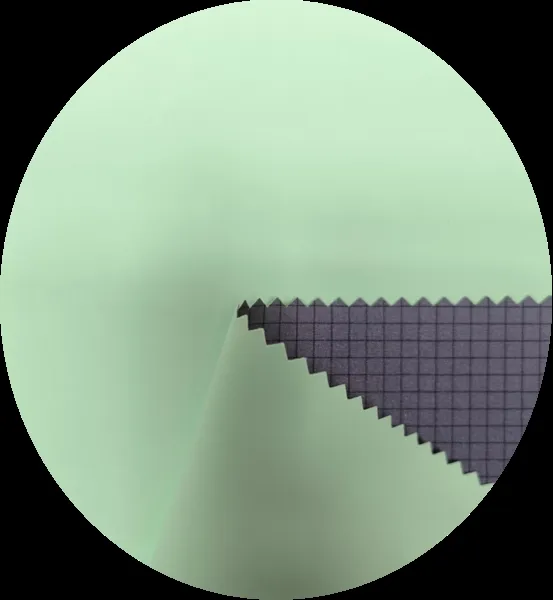
Not all nylon taffeta fabrics are created equal. Xiangpeng Fabric Tech’s 20D Matte Checkered Nylon Taffeta is one example. The “20D” stands for fine, lightweight yarns, and the matte finish provides a more premium look than shiny fabrics. The checkered appearance adds structure and durability.
In this guide, we explain what nylon taffeta is, why it’s so popular for jackets and other outdoor wear, and how to choose the right fabric for your next project or purchase.
What Is Nylon Taffeta? A Fabric Breakdown Without the Jargon
First, let’s separate the two words. Nylon is a synthetic polymer—it’s the same family of materials used in fishing lines, parachutes, and even automotive parts. Nylon fibers are inherently tough, elastic, and resistant to abrasion. Taffeta refers to a specific weaving style: a plain weave where the weft (horizontal) threads pass over one and under one warp (vertical) thread in a tight, crisp grid. That weave creates a smooth, slightly stiff surface with a subtle rustle when you move.
Combine nylon fibers with a taffeta weave, and you get nylon taft: a fabric that is lightweight, quick-drying, and surprisingly resistant to tearing. Unlike cotton or polyester fleece, it won’t absorb water like a sponge. Unlike cheap vinyl rainwear, it breathes enough for moderate activity.
The “20D” in Xiangpeng’s product is the real star for jackets. Twenty denier means each filament weighs 20 grams per 9,000 meters of length. That’s ultra-fine—think of a human hair, but even thinner. Why does that matter for outdoor wear? Lower denier equals lower weight, better packability, and a softer drape. High denier (like 200D) is used for backpacks or luggage where brute strength matters more than weight.
So when you see a jacket labeled “20D nylon taffeta,” you’re looking at a fabric that balances featherlight portability with genuine durability for its weight class. It’s not ripstop (though checkered patterns add some tear resistance), but it’s tough enough for trail running, windshell duties, or an unexpected spring shower.

Why Jacket Brands Keep Coming Back to Nylon Taffeta
Walk into any outdoor retailer—REI, Decathlon, or even a Uniqlo—and you’ll find rack after rack of nylon taffeta shells. There’s a reason this fabric hasn’t been replaced by fancier alternatives. Here are the five performance advantages that keep it relevant.
1. Exceptional Strength-to-Weight Ratio
A standard nylon taft jacket weighs between 150 and 250 grams (5–9 ounces). That’s lighter than a smartphone. Yet the fabric’s tear strength—thanks to nylon’s natural elongation properties—is significantly higher than that of polyester of the same weight. You can crumple it into a stuff sack, shove it into a backpack, and pull it out hours later without permanent creases or damage.
For comparison, a cotton windbreaker of similar coverage would weigh two to three times as much and offer zero water resistance. A polyurethane-coated nylon jacket (like cheap ponchos) would be heavier and non-breathable. Nylon taffeta hits the middle perfectly.
2. Natural Water Resistance (With Room for Enhancement)
Nylon taffeta is not fully waterproof on its own—that would require a coating or laminate. But the tight taffeta weave and nylon’s low moisture absorbency (around 4% versus cotton’s 24%) mean light rain beads up and rolls off initially. Many manufacturers add a DWR (Durable Water Repellent) finish, which boosts performance to “showerproof.” For most hikers and city commuters, that’s enough. You only need full waterproof membranes for hours of heavy rain.
Xiangpeng’s 20D matte checkered nylon taffeta, for instance, can be treated with a DWR coating without losing its soft hand feel. The result: a jacket that sheds mist and drizzle while still breathing.
3. Windproof Without Being a Sweatbox
Because of its tight weave, nylon taft blocks the vast majority of wind. In medium breezes (10–20 mph), a single layer cuts wind chill dramatically. Yet unlike fully non-porous materials like vinyl, it allows water vapor from sweat to escape—slowly, but enough for low-to-moderate output activities like walking or casual cycling.
If you’ve ever worn a garbage-bag poncho on a hike, you know the misery of trapped moisture. Nylon taffeta avoids that trap.
4. Packability That Travelers Love
Here’s a test: try to fold a leather jacket into your carry-on. Now try the same with a nylon taft windbreaker. The difference is stark. Most nylon taffeta jackets can be rolled into their own pocket and end up the size of a water bottle. For backpackers, cyclists, and business travelers who need emergency outerwear, that packability is a lifesaver.
The 20D variant is especially packable—thinner filaments mean less bulk. You can literally carry it in a large pants pocket.
5. Affordable and Easy to Maintain
High-end shells from Arc’teryx or Norrøna can cost $400–$800. By comparison, a quality nylon taft jacket from a value-focused brand often ranges from $30–$80. That’s not a typo. The fabric is relatively inexpensive to produce, and it can be sewn without highly specialized equipment. For budget-conscious shoppers or brands developing entry-level outdoor gear, this cost advantage is significant.
Maintenance is just as simple: machine wash cold, hang dry, and reapply DWR spray every few washes. No special detergents, no dry cleaning, no delamination worries.
Nylon Taffeta vs. Other Jacket Fabrics: A Clear Comparison
The table below compares nylon taft (20D) against three common jacket materials: polyester taffeta, cotton canvas, and 2‑layer Gore‑Tex.
| Ejendom | Nylon Taffeta (20D) | Polyester Taffeta | Cotton Canvas | Gore‑Tex (2‑layer) |
|---|---|---|---|---|
| Vægt | Very light (~50‑70 gsm) | Light (~60‑80 gsm) | Heavy (250‑400 gsm) | Medium (120‑180 gsm) |
| Water resistance (uncoated) | Moderate (light rain) | Low to moderate | Poor (absorbs water) | High (membrane) |
| Åndbarhed | Moderat | Low to moderate | High (when dry) | High to very high |
| Revestyrke | Høj | Medium | Meget høj | Medium |
| Packability | Excellent (fits in pocket) | God | Poor (bulky) | God |
| Approx. jacket cost (retail) | 30‑80 | 25‑70 | 60‑150 | 200‑600 |
| Best for | Windbreakers, light rain shells, travel jackets | Budget activewear, linings | Workwear, heavy field jackets | All‑weather hiking, skiing |
As the table shows, nylon taft doesn’t win every single category. Gore‑Tex is better in sustained downpours. Cotton canvas is tougher for heavy brush. But for the sweet spot of lightweight, packable, wind-resistant, and affordable, nylon taft dominates.
Real-World Use Cases: Where Nylon Taffeta Jackets Shine
-
The Urban Commuter (Spring and Fall)
Imagine someone in Seattle or London who bikes to work. Mornings are damp, and afternoons might clear up. They need a jacket that blocks wind, shrugs off drizzle, and fits easily into a messenger bag. A heavy raincoat is overkill. A softshell is too warm. A nylon taft jacket with a DWR finish is perfect—it layers over a sweater or hoodie, weighs nothing, and dries in minutes once inside.
-
The Backpacker’s Emergency Shell
On long-distance trails like the AT or Pacific Crest Trail, thru-hikers often carry a “wind shirt” made of nylon taft as a supplement to their rain gear. Why? Because on cool, dry days, a full rain jacket traps too much moisture. A nylon taffeta windbreaker adds just enough warmth and wind protection while remaining breathable. And if the weather turns really nasty, they put the hardshell over it. Two pounds saved over a heavier jacket adds up to over 2,000 miles.
-
Budget Outdoor Gear for Youth Programs
Scout troops, outdoor schools, and summer camps need durable, inexpensive jackets for dozens of kids. Nothing hurts more than watching a $400 shell get torn on a branch. Nylon taffeta jackets hit the right price point—replaceable but not disposable. They resist tears well enough for typical camp use, and when one eventually fails, it’s not a financial disaster.
-
Branded Merchandise for Corporate Events
Companies increasingly give away branded outerwear as swag. But nobody wants a heavy cotton hoodie they’ll never wear. A lightweight nylon taft jacket packs into its own pouch, fits everyone from S to XL, and looks modern. The matte finish and checkered texture on Xiangpeng’s fabric even elevate it beyond “cheap giveaway” territory.
How to Spot Quality Nylon Taffeta: The ADL 120 Analogy
Remember the lift‑sliding door example from earlier? The same principle applies here: specs matter. Not all nylon taft is created equal. Here’s what separates good from mediocre:
-
Denier: 20D to 40D is ideal for jackets. Under 15D gets too fragile; over 70D starts feeling stiff and heavy.
-
Finish: Matte finishes hide wrinkles and look more premium than shiny taffeta, which screams “cheap costume.”
-
Weave pattern: A plain taffeta weave is fine, but a checkered or ripstop pattern adds tear resistance without much weight gain.
-
Coating: For light rain, a standard DWR is enough. For heavier use, ask for a PU or acrylic coating (at the cost of breathability).
-
Certifications: For outdoor brands, Bluesign or OEKO‑TEX certifications ensure no harmful chemicals.
Xiangpeng’s 20D Matte Checkered Nylon Taffeta checks all these boxes: appropriate denier, attractive matte finish, subtle checkered reinforcement, and the ability to take coatings cleanly.
Care and Longevity: Making Your Nylon Taffeta Jacket Last
A well-maintained nylon taft jacket can easily last five to seven years of casual use, or two to three seasons of heavy outdoor abuse. Here’s the routine:
-
Wash cold (30 °C / 86°F) with a mild liquid detergent. Avoid powder detergents that may leave residue.
-
Never use fabric softener. It coats the fibers and ruins water repellency.
-
Hang dry out of direct sunlight. High heat from a tumble dryer can melt or shrink nylon.
-
Reapply DWR spray when water stops beading (usually every 6–12 months). Spray on while damp, then tumble dry on low for 10 minutes to activate.
-
Repair small tears with clear nylon repair tape or a dab of seam sealer. Because nylon taffeta doesn’t fray badly, small punctures won’t run.
One myth to bust: you do not need to dry-clean nylon taft. Dry cleaning chemicals are overkill and actually reduce the fabric’s lifespan.
FAQ
Q1: Is nylon taffeta waterproof or just water-resistant?
On its own, water-resistant. With a DWR coating, it handles light rain for 30–60 minutes. For full waterproofing, a PU or TPU laminate is needed, which reduces breathability.
Q2: Can I wear a nylon taffeta jacket in winter?
As an outer shell over insulation (fleece or down), yes. Alone, it provides no warmth—only wind protection. Layer it over mid‑layers for cold weather.
Q3: How does 20D nylon taffeta compare to 40D for durability?
40D is about twice as thick, more abrasion‑resistant, but also heavier and less packable. 20D is ideal for ultralight jackets; 40D works for frequent bushwhacking.
Q4: Does nylon taffeta shrink or stretch over time?
Minimal shrinkage if washed cold. Nylon has low moisture absorption and good dimensional stability. Avoid high-heat drying to prevent warping.
Q5: Can I print or dye nylon taffeta for custom branding?
Yes. Nylon accepts sublimation and screen printing well. Xiangpeng’s 20D matte checkered fabric is often used for custom outdoor gear with logos.
Upgrading Your Outdoor Gear? Start With Nylon Taffeta
If you’re a brand looking for a reliable, cost‑effective fabric for your next jacket collection, or a shopper tired of overpaying for hype, nylon taft deserves a serious look. It won’t replace a heavy‑duty mountaineering shell, but for 90% of what people actually do—walk the dog, commute by bike, pack for a weekend trip—it’s more than enough.
The 20D Matte Checkered Nylon Taffeta from Xiangpeng Fabric Tech combines low weight, matte aesthetics, checkered reinforcement, and reliable supply for both small labels and bulk production. Request a swatch, test its tear strength yourself, and feel the difference compared to bargain‑bin polyester.
Ready to spec nylon taft for your jackets or outdoor line? Please feel free to contact us anytime with any questions or needs.